Our Orientation
Suicide-safer care isn't a checklist.
It's a conversation of practice.
The Center for Ethics in Suicide-Safer Care (CenterEthics-SSC) was founded on a simple but urgent premise: most providers want to do right by their clients in crisis, but the behavioral health field has left them without a clear ethical compass.
We believe that change occurs within the context of human relationships and connection, where the provider and client work side by side, guided by north-star ethical principles.
CenterEthics-SSC brings together ethical principles, risk management, and lived experience to train behavioral health and mental health providers, organizations, and malpractice insurers in suicide-safer care standards that are practical, legally grounded, and deeply human.

Our Logo
The Shared Compass Framework™
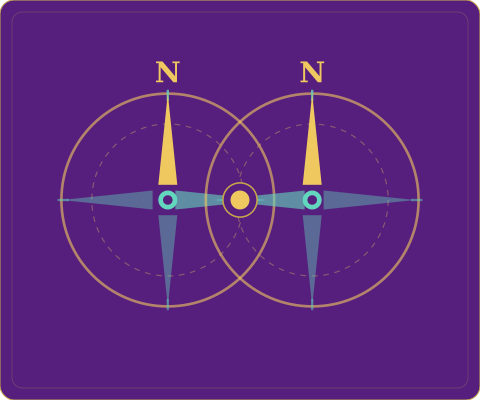
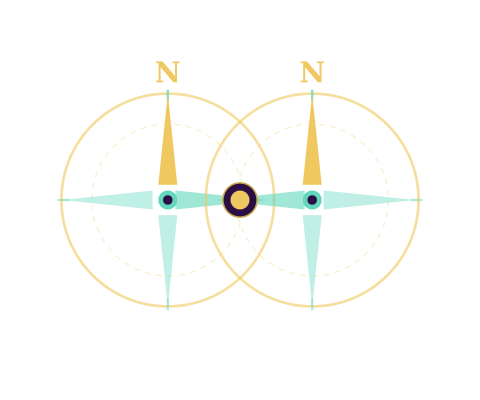
The logo at the heart of the Center for Ethics in Suicide-Safer Care is two compasses, overlapping. Each stands complete on its own, its own needle and its own bearing, representing the provider and the client as two people who each bring their own judgment, experience, and orientation into the conversation. Neither compass points for the other. Where the compasses meet, marked by a single joined center, is the collaborative conversation itself: the place where clinical expertise and lived experience align on a shared direction forward.
A compass does not name a destination, it tells you which way is true in the moment, so you can keep correcting course. That's the nature of suicide-safer care. It isn't one decision made once; it's an ongoing process of orientation, re-orientation, and recalibration as risk shifts and the relationship deepens. Suicide-safer care rarely offers perfect certainty, only careful, continual calibration.
Both compasses point toward the same coordinate: the values of safety, dignity, and survival. That's what “ethical” means here: not a standard imposed on providers from outside, but a shared bearing, one that provider and client discover together through relationship and conversation. Providers do not have to choose between their values and the evidence, or fear the work of navigating risk. The compass points the way, found together, not alone.
Using a conversational approach with a behavioral definition of suicide, our training charts the ethical course that connects standards of care, the Zero Suicide framework, and risk management into a single direction forward.
Meet the people behind CenterEthics-SSC
Two social workers with four decades of national leadership in suicide prevention, and the NASW Standards of Care task force behind them.
Our Team